Flying mystics of Tibetan Buddhism by Glenn H Mullin”/>From Flying Mystics of Tibetan Buddhism by Glenn H. Mullin
It could have been a dream.
A Buddhist monastery high in the mountains of Taiwan, carved into the hillside. Only a narrow path separated me from the raging sea waves far below. If I had gotten too close to the edge and lost my balance, nothing would have caught me. I wondered if that was part of the point.
The teacher was charismatic, compassionate and controversial, and as grandly dramatic as the monastery built in his name. His story of having been a child soldier in Burma is often part of his introduction. When he finally reached Taiwan after a long series of adventures, he shaved his head and etched the Heart Sutra on his skin. One of the nuns told me that his tattoo had misspellings – a detail that makes it all the more endearing.
One day Master invited me to go for a walk. He took me to a small rock cave and explained that he once meditated right there for a year. That was the reason why he decided to build his monastery here – the heart of his world.
Then he told me something else: that he had neither eaten nor drunk most of the year that he had lived in the cave. He only had a few pills made from the nectar of a mysterious flower, but otherwise didn’t drink anything (except a few drops of water) for a whole year.
As expected, I stared at him in disbelief. Eventually I regained my composure and asked him to repeat his story to make sure I understood. So he repeated his story with the same incomprehensible information as before. I just kept staring at him, which seemed to amuse him. He laughed softly, patted my shoulder and told me it was time to go.
What should I do with this story? Knowing the master so well, I’m pretty sure he’s not a liar, and yet . . . should I actually believe him? The setting certainly added more power to the account; Had he told me this story in more familiar territory, what would I have thought? I still don’t know the answer to this question.
From Flying Mystics of Tibetan Buddhism by Glenn H. Mullin
I eventually went back to him to ask him again, but he wasn’t particularly accommodating. I think he enjoyed my dismay too much and decided to let me in it. All he did was remind me that there were stories of the Buddha doing such things. “But you are not the Buddha!” was my spontaneous answer. He smiled mysteriously and walked away.
I can understand the role of the “mysterious Buddhist teacher”. It’s a tradition that Buddhist teachers have long enjoyed, playing with other people’s questions in hopes of untying some of the knots in our minds. Not everything needs to be explained, nor does every question have a concrete answer.
But it wasn’t just a game for him, even if he had fun doing it. Master insisted on the facts of his story and his devotees emphatically repeated them to me. He may have toyed with me, but he meant what he said and he waited for me to intervene.
But how? I continued to search the drawers of my mind for the tools I needed to understand his claims. I didn’t think he was lying; yet I couldn’t believe he was telling the truth. Was there something in between that I couldn’t see?
I decided that I needed independent help, and I knew exactly who to turn to: an eminent Tibetan teacher with a PhD from Cambridge. Surely she would be able to explain this dilemma to me in a way that I would understand. “What do you think of these stories?” I asked her one day. “Is he lying?”
Unfortunately, she confused me even more. “Things like that are possible,” she said. “I did something similar myself – but only for a few months. I haven’t made it a year yet.”
I stopped and stared at her. “Serious?” was the most academic answer I could muster. And then she did what the master had done before: she smiled enigmatically and brought the conversation to something else.
From Flying Mystics of Tibetan Buddhism by Glenn H. Mullin
The mysterious role of the Buddhist teacher is clearly alive and strong. That’s one thing I learned from those interactions. But playfulness aside, I suspect there’s more at stake than I can see. I don’t think these teachers are liars, but I don’t really think they are telling the truth. I therefore have the possibility that I lack the necessary tools in my intellectual inventory.
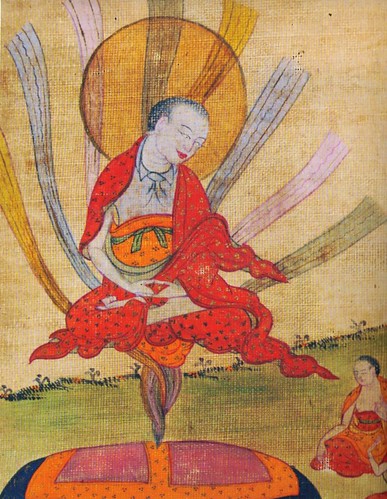
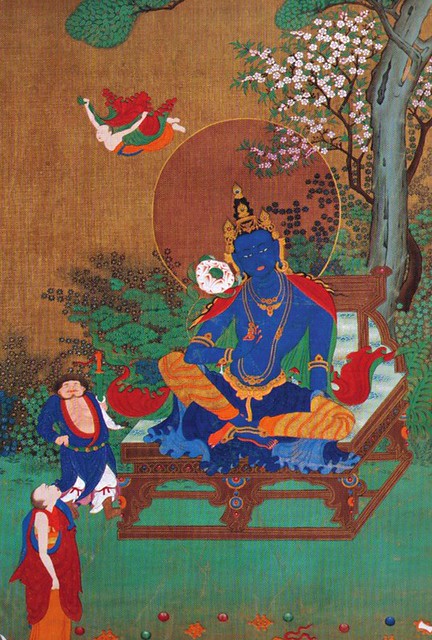
These teachers also point out to me a long tradition of magical storytelling, most of which are far more dramatic than an extended fast. Flying Monks and Floating Masters are a familiar part of this terrain. Some are even said to be able to slip through keyholes, while others have been able to see past lives. Enchanting illusions are created for the benefit of the viewer and countless teachers should be able to disappear in a rainbow cloud if necessary. The Buddha gave a teaching of a jeweled walk in heaven while his body was transformed into fire and water during the miracle of Sravasti. There is no shortage of material when it comes to superhuman feats in the Buddhist tradition. Sitting in a cave without food is tame in comparison.
Even so, these stories continue to defy my ability to comprehend them. I don’t want to dismiss the magical and challenge traditional materialism. I’m pretty sure I’ll miss out on all the good stuff if I do that. But I’m not in a position to take these stories either. And there are so many of them.
When I asked one of the nuns living in the Master’s monastery what she thought of his claim, she barely responded. “He’s a great teacher. Of course what he says is true,” she explained matter-of-factly. Much more demanding is the monk in her monastery, who spends his time flying through the trees in the forest. “You can’t imagine how frustrating it is to get him to come down!”
Did you miss our previous article...
https://yogameditationdaily.com/meditation-retreats/finest-uk-and-european-meditation-retreats